Posts

Showing posts from September, 2022

Welcome!

Image
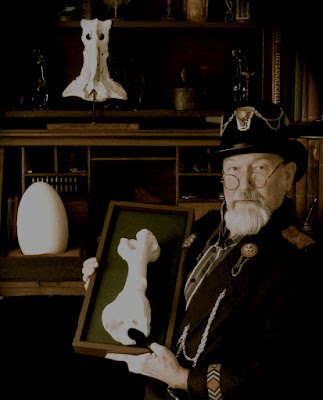
Welcome from the Professor of Garbology! This is my blog associated with the Browns Bay Library's "Unbelieveable" theme for the October school holidays. Below are some of the weird and wonderful objects from my collection of items found on beaches, in the trash and at junk stores, as well as on my youthful travels around the globe. On display in this picture are some Moa "relics" - two large bones and an enormous egg.

Introduction

Image
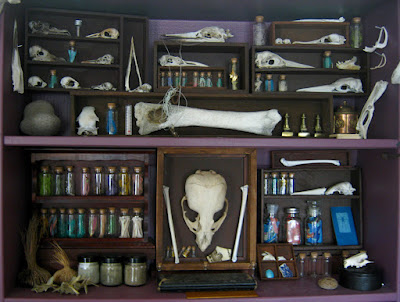
This showcase is an attempt to arouse interests in the natural world, history, and science in children: so that they will develop enquiring minds; establish engagement in fields other than social media; enjoy reading and studying; and get out and about in the real world to discover the all manner of fascinating and even unbelievable creatures and objects that are out there waiting to be encountered. The world needs more people asking intelligent questions - as well as young scientists, naturalists, explorers, readers, students, and good old-fashioned collectors and hobbyists. Below: Selections from my Cabinet of Curiousities: “The cure for boredom is curiosity. There is no cure for curiosity.” - Albert Einstein    “Computers are stupid - they only give you answers.” - Picasso   List of Exhibits:  37- West African Nail Fetish 36- Pigeon Chick Preserved in Meths 35- Indian Arrowheads 34- Rock-borer Shell with Sandstone 33- Volcanic Vent with Crystals 32- Cowr...

#37-West African Nail Fetish

Image
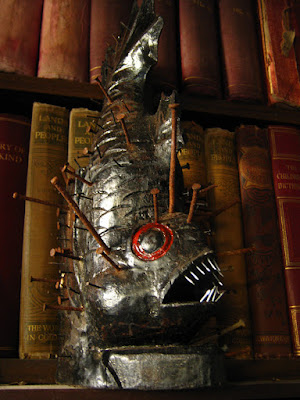
As used by traditional West African healers (aka witchdoctors). The nails represent spells which have been cast. Below: The "Wide World" magazines from the 1950's and '60's had some gripping reads: Nail fetishes were protective figures used by individuals, families, or whole communities to destroy or weaken evil spirits, prevent or cure illnesses, repel bad deeds, solemnize contracts or oath-taking, and decide arguments. A diviner or holy person would activate the statue, using magical substances.  Some were used to identify and hunt down unknown wrongdoers such as thieves, and people who were believed to cause sickness or death by occult means. They were also used to punish people who swore false oaths and villages which broke treaties. To inspire the fetish to action, it was both invoked and provoked. Invocations, in bloodthirsty language, encouraged it to punish the guilty party. It would also be provoked by having gunpowder exploded in front of it, and havin...
#36-Pigeon Chick in Meths

Image
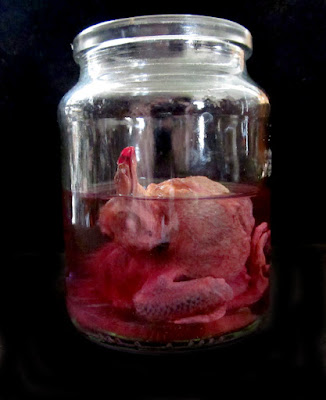
I found this dead baby pigeon in Phoenix Plaza, Browns Bay, after a storm. It had been blown out of a nest up in a large palm tree.

#35-Indian Arrowheads - Arizona

Image
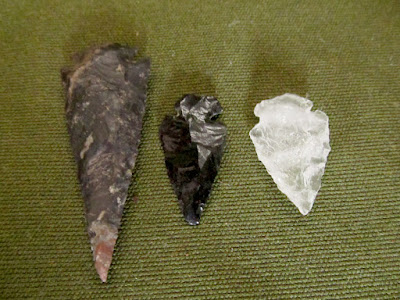
Three arrowheads knapped (chipped) from stone, obsidian and clear crystal Read more on native American Indian weapons: http://www.native-languages.org/weapons.htm

#34-Rock-borer Shell with Sandstone

Image
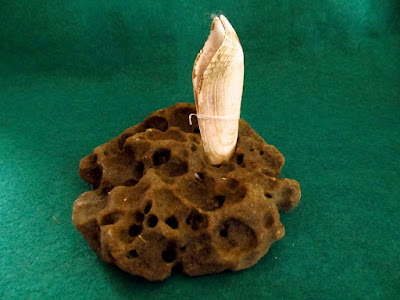
Rock-borer shells feed on nutrient-rich sandstone in the Hauraki Gulf. Found on Browns Bay beach.

#33-Volcanic Vent

Image
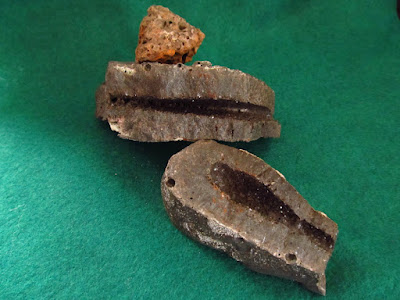
Pieces of hardened magma from an Auckland volcano with interior crystals and lump of lava attached. Found on the railway line at Dairy Flat, north of Auckland.

#32-Cowrie Shell Necklace - Avondale Market

Image
Cowrie shells were used for hundreds of years as money all over the world.

#31-Japanese Box

Image
A laquer box made in Japan with an exquisite landscape with sacred white cranes delicately carved from wood.

#30-Wenteltrap Shell - Auckland Shell Club

Image
In the 18th century these shells were so rare that one sold for the equivalent of $NZ200,000. One of the largest websites for information on shells is: https://www.shells-of-aquarius.com

#29-Crown Jewels Book - Hospice Shop

Image
Featuring excellent photographs and descriptions of the Crown Jewels. Crown Jewels Stolen! Colonel Thomas Blood, a known conspirator, made an infamous but unsuccessful attempt to steal the British Crown Jewels from the Tower of London in 1671. Disguised as a clergyman, Blood and his gang swiped the royal regalia from under the nose of their keeper, but they were captured as they made their escape through the capital. Blood was mysteriously pardoned by the king, and the regalia, although a little bashed, was given a much more secure home. Read more: https://www.worldhistory.org/article/1953/colonel-blood--the-theft-of-the-crown-jewels/  More on the jewels in the Tower of London: https://www.hrp.org.uk/tower-of-london/history-and-stories/the-crown-jewels/#gs.dkd9ao More on the Tower of London, including The Bloody Tower: https://www.planetware.com/london/tower-of-london-eng-l-tl.htm   

#28-Doll's Eyes

Image
Used for repairing dolls. Collected at Avondale market. Below: before: Below: after:

#27-Teeth - Plaster Cast

Image
Dentists make plaster casts like this when they make false teeth. Read on some history of false teeth: https://www.bbc.com/news/magazine-33085031   Below: wooden false teeth!: Below: a vintage advertisement: A Joke: A little old couple walked slowly into McDonalds, the man placed his order and then paid for their meal. The couple took a table near the back wall and started taking food off of the tray. There was one hamburger, one order of french fries and one drink. The little old man unwrapped the plain hamburger and carefully cut it in half. He placed one half in front of his wife. Then he carefully counted out the french fries, divided them in two piles and neatly placed one pile in front of his wife. Other customers were thinking: "That poor old couple. All they can afford is one meal for the two of them."   As the man began to eat his french fries a young man came over to the old couple's table. He politely offered to buy another meal for the old couple to eat. T...

#26-Jade Chopsticks

Image
These chopsticks have been carved from jade in China. Don't know how to use chopsticks? It's easy!  See: https://www.thespruceeats.com/how-to-use-chopsticks-692615 Some easy Chinese recipes:  https://www.thespruceeats.com/quick-and-easy-chinese-recipes-for-beginners-4118330  Kidspot Kitchen - easy Asian recipes for children:   https://www.kidspot.com.au/kitchen/recipes/collections/chinese-recipes

#25-Swan Doily - 1950's?

Image
These four swans have been crocheted by hand. Such items were very popular last century in the 1950.s and '60's.    Learn to Crochet - it's simple!: How to Crochet for Absolute Beginners: Part 1 - YouTube https://www.youtube.com/watch?v=aAxGTnVNJiE

#24-Albatross wing-bone - 90 Mile Beach

Image
Found in the dunes at Hukatere. Below: Southern Royal Albatross: Read more at: https://www.doc.govt.nz/nature/native-animals/birds/birds-a-z/albatrosses/

#23-Thorny Oyster (Spondylus)- Auckland Shell Club

Image
These shells have developed long spines to protect them from being eaten by fish. Read more: https://en.wikipedia.org/wiki/Spondylus  Spondylus shells were highly valued by the Aztecs and used in their ornate jewellery. At certain times of the year these shells are poisonous - Aztec shamans would eat the toxic flesh to induce hallucinations. Below; an Aztec shaman: Below: Aztec mosaic snake and skull with turquoise and spondylus shell: Read more: https://www.mexicolore.co.uk/aztecs/home/skilled-use-of-conch-shell-in-mosaics   Read about thorny oysters and their cultural significance in South American cultures: https://storiesfromthemuseumfloor.wordpress.com/2018/06/22/red-gold-a-story-of-sacred-shells/   One of the largest websites for information on shells is: https://www.shells-of-aquarius.com   Spondylus are masters of disguise - their long spines encourage the growth of very colourful marine algae which serves to camouflage the large tasty oyster from predator...

#22- Tibetan Demon

Image
This Tibetan demon (Vrajapani) brandishes a thunderbolt (vraja) as he protects the Buddha’s teachings. Traditional religous painting by Tibetan exiles in Daramsala, India. Below: a brass thunderbolt: See more Tibetan demons: http://monsterbrains.blogspot.com/2021/06/tibetan-demon-paintings-19th-century.html

#21-Dried Skin of Porcupine Fish - 90 Mile Beach

Image
The bodies of porcupine/puffer fish are covered in sharp spines. Some species are poisonous, having tetrodotoxin in their internal organs, such as the ovaries and liver. This neurotoxin is at least 1200 times more potent than cyanide.   Pufferfish are poisonous and should not be eaten under any circumstances. The whole body, but in particular the digestive organs, contain deadly neuro-toxins which can kill humans and other animals. Dogs are sometimes killed by the poison when they eat puffer fish washed up on the beach! Do not touch them with your hands should you accidentally catch one while fishing.  Read more:   https://fishingmag.co.nz/fish-new-zealand-sea-fish-species/poisonous-pufferfish-contusus-richei-also-called-globefish-boxfish Read more: https://en.wikipedia.org/wiki/Porcupinefish

#20-Beaked Whale Tooth

Image
I found several bones (including this tooth) from a beaked whale washed up on the rocks at Papa Aroha on the Coromandel. Beaked whales (systematic name Ziphiidae) are a family of cetaceans noted as being one of the least known groups of mammals because of their deep-sea habitat and apparent low abundance. They are moderate in size, ranging from 4.0 to 13 metres (13.1 to 42.7 ft) and weighing from 1.0 to 15 tonnes.  Below: A Cuvier's beaked whale: Beaked whales are unique among toothed whales in that most species only have one pair of teeth. The teeth are only visible in males, which are presumed to use these teeth in combat for females for reproductive rights. In females, the teeth do not develop and remain hidden in the gum tissues.    Read more:  https://en.wikipedia.org/wiki/Beaked_whale

#19-Shell Fossils - Upper Wanganui River 2017

Image
Large seams of fossilised shells can be found on the road berween Wanganui and Ratehei. Millions of years ago most of New Zealand was under the ocean, and has since been lifted up by tectonic plate activity. In this area there are also fossils of crabs as well as much larger sea creatures.